Prediction Markets: The new frontier shaping the future of trading
For decades, financial markets have revolved around a familiar architecture: equities, commodities, FX, and rates surrounded by layers of derivatives for hedging and speculation.
Today, something different is happening.
Prediction markets venues where participants trade contracts on ‘whether events will happen’ are moving from the fringes to the mainstream. They’re not just a curiosity anymore; they’re becoming a serious complement to traditional markets, attracting institutional attention, regulatory scrutiny, and billions in volume.
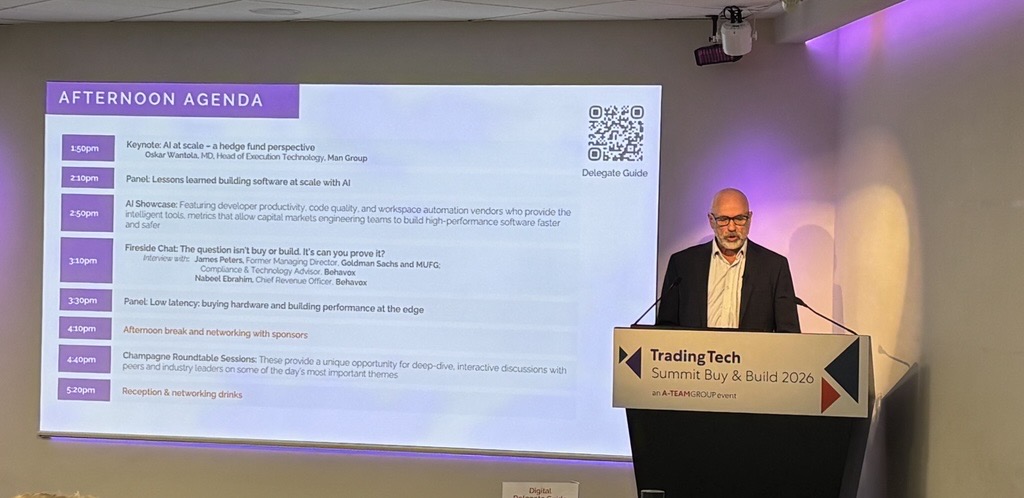
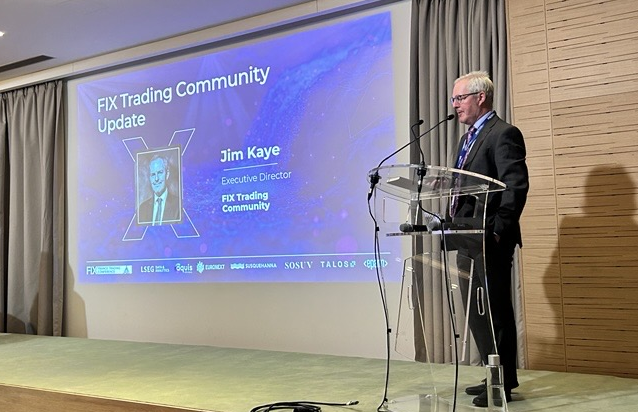
At FIA Chicago, this shift was front and centre: prediction markets are increasingly seen as an extension of traditional financial markets, not merely a competitor.
From assets to events: a structural shift
Traditional markets let you express views on:
- The earnings of a listed company
- The level of an equity index or interest rate
- Commodity prices or currency moves
Prediction markets go one step further and let you trade on:
- Will candidate X win the election?
- Will a TikTok ban pass by a certain date?
- Will a central bank cut rates at the next meeting?
- Will a company achieve a specific KPI or product launch milestone?
In other words, you move from asset-based risk to event-based risk.
This is not theoretical anymore. One regulated platform, Kalshi, reportedly scaled from roughly $300 million in annualized volume to around $50 billion within a year, with weekly volumes above $1 billion. (Medium)
On the crypto-native side, Polymarket processed about $9 billion in volume and 314,000 active traders in 2024, with monthly volume growing from $54 million in January to over $2.6 billion in November a 48x increase within a year. (The Block)
Across major platforms, global prediction markets are estimated to have generated over $27.9 billion in trading volume in 2025, with more than $3 billion in Q3 alone—a five-fold increase year-on-year. (The Body Lock)
This is no longer an experiment. It’s a new layer of market infrastructure.
Why prediction markets are exploding now
- They fit how people consume information today
News and opinion move at the speed of Twitter, TikTok, and 24/7 cable. Investors, traders, and even retail users don’t just want to read the news, they want to act on it in real time.
Prediction markets naturally align with this behaviour:
- A TikTok ban hearing is scheduled → a contract updates every second.
- A leadership challenge is rumoured → odds move as new headlines emerge.
- An NFL game or Champions League match kicks off → price reacts to every play.
At FIA Chicago, one platform described how they can now list a new market in under an hour, using templated structures to cover elections, sports, macro, and culture. When a topic starts trending, a market can appear almost instantly.
- They democratise price discovery on non-tradable risks
Traditional markets tell you the price of oil or a bank’s equity. Prediction markets tell you:
- The implied probability of a rate cut
- The chance a new regulation will pass this year
- The odds of a coalition forming after an election
Research has repeatedly found that prediction markets can be as accurate or more accurate than polls for elections and other binary events. (ScienceDirect)
For institutional players, this is important: prediction markets become a live sentiment and probability feed that can complement models, research, and flow-based signals.
- They create new hedging and risk-transfer opportunities
The line between “hedging” and “speculation” has always existed in derivatives markets. The same is true here.
Concrete examples:
- A media company whose advertising revenue depends on election outcomes can hedge against a surprise result by using political prediction markets.
- A streaming platform whose Q4 numbers depend heavily on a blockbuster release can use markets on “Will film X be released by date Y?” as a proxy hedge.
- A broker or retail app whose volumes spike during specific macro or policy events can partially hedge operational or revenue risk through event contracts.
On the cultural side, the numbers are anything but trivial.
Analysts estimate Taylor Swift’s Eras Tour generated around $5 billion in U.S. consumer spending, boosting U.S. GDP by approximately 0.02% and retail sales by 0.03%. (nomuraconnects.com) One U.S. think tank projected her U.S. tour could reach $4.6 billion in consumer spending, bigger than the GDP of more than 30 countries. (MAS)
In the UK, live music including Swift and other major artists added £10 billion to the economy in 2024. (The Guardian)
If you’re a venue operator, city tourism board, hotel chain, airline or sponsor whose revenue is tightly linked to such events, having liquid markets on cultural outcomes is not just fun it’s economically relevant.
It still walks and talks like a market
Despite the novelty of the underlying events, the market structure of prediction venues increasingly resembles traditional exchanges:
- Market makers provide continuous liquidity (including well-known firms like Susquehanna on some platforms).
- A long tail of independent traders and small shops acts like a new class of quantitative or event-driven traders.
- Venues implement surveillance systems to detect spoofing, wash trading, insider trading, and manipulation—similar to equities and derivatives exchanges. (publikationen.bibliothek.kit.edu)
As volumes and speed grow, platforms face classic market microstructure questions:
- latency and throughput
- fair access to data feeds
- priority rules and matching logic
- interoperability with brokers and APIs
In other words, the “weird” part is the event itself.
Everything around it increasingly looks like modern market infrastructure.
From gambling narrative to “Capitalism in pursuit of truth”
Regulators and the public often ask: “Isn’t this just gambling?”
The distinction usually comes down to two questions:
- Is the risk artificial or natural?
- Rolling dice is artificial.
- Elections, wars, policy changes, product launches, weather, and sports are natural events that happen regardless of the market.
- Is there a house edge?
- In a casino, the house always wins over time.
- In prediction markets, the venue takes a fee; participants trade against each other, like on a futures exchange.
This is why CFTC-regulated venues, relaunch approvals, and court decisions around platforms such as Kalshi and Polymarket matter so much: they mark a gradual legitimisation of prediction markets as a form of derivatives, not simply betting. (Reuters)
Why this matters to Horizon Trading Solutions
This shift is highly relevant to our clients and to the broader trading ecosystem.
We see three major implications:
- New data and signal layer
Prediction markets produce continuously updated probabilities on:
- macro outcomes (rates, inflation, policy)
- political risk (elections, legislation, sanctions)
- corporate risk (product launches, regulatory approvals)
- cultural and sports events that indirectly drive consumer and market behaviour
For banks, brokers, hedge funds, and market makers, this is a rich source of alternative data that can feed:
- trading algos
- execution strategies
- client advisory
- risk dashboards
- New types of products and workflows
As prediction markets become more regulated and integrated with brokers:
- execution desks may route event contracts alongside futures and options, especially for binary or digital payoffs.
- OEMS/EMS platforms may need to handle event-based instruments with different lifecycle rules (settlement conditions, validation of results, etc.).
- risk engines may need to incorporate event curves and correlations with traditional assets.
For a firm like Horizon, which builds flexible, event-driven trading and execution technology, this is a natural extension of what we already do in options, structured products, and complex workflows.
- Convergence of financial and non-financial risk
The boundaries between “financial markets” and “everything else” are blurring:
- Geopolitics, social media trends, macro policy, and culture already move markets.
- Now they can also be directly tradable.
That means:
- more cross-asset and cross-domain strategies
- more demand for low-latency, high-availability infrastructure
- more sophisticated surveillance and compliance capabilities
This is exactly the direction in which advanced trading technology is already moving.
Looking ahead: from niche to infrastructure
Looking at the growth trajectory, funding rounds, and regulatory milestones, it’s plausible that prediction markets will become a multi-trillion-dollar asset class over the next decade, especially if integrated directly into:
- broker platforms
- retail trading apps
- media and news sites
- institutional execution workflows
Some platforms are already piloting integrations where news articles display live market odds next to headlines, turning passive reading into active, tradable insight. (Forbes)
For Horizon and our clients, the key is clear:
Prediction markets are not replacing traditional markets. They are expanding what “the market” can price.
And as the universe of tradable risk expands from balance sheets and order books to elections, regulation, and culture, the need for robust, flexible, multi-asset trading technology will only grow.
Prediction markets are venues where participants trade contracts on whether specific events will happen, shifting from asset-based risk to event-based risk. Unlike traditional markets that focus on equities, commodities, FX, and rates, prediction markets let traders express views on elections, policy decisions, product launches, and cultural events. Global prediction markets are estimated to have generated over $27.9 billion in trading volume in 2025, with more than $3 billion in Q3 alone—representing a five-fold increase year-on-year. Regulated platform Kalshi reportedly scaled from roughly $300 million to around $50 billion in annualized volume within a single year. Prediction markets are increasingly being legitimised as a form of derivatives rather than gambling, since they involve natural risks (elections, policy changes, weather) rather than artificial ones, and participants trade against each other without a house edge. CFTC-regulated venues and recent court decisions around platforms like Kalshi and Polymarket are reinforcing this distinction. Institutional players can use prediction markets to hedge against event-driven risks—for example, a media company can hedge election-related advertising revenue swings, or a broker can partially hedge operational risk tied to macro policy events. Prediction markets also serve as a live sentiment and probability feed that complements traditional models, research, and flow-based signals. Prediction markets are driving the need for trading technology that can handle event-based instruments with unique lifecycle rules, including settlement conditions and result validation. Execution desks may route event contracts alongside futures and options, while OEMS/EMS platforms and risk engines must incorporate event curves and correlations with traditional assets.Frequently Asked Questions