- An Order Management System (OMS) is a software platform that serves as the central hub for managing the entire trade order lifecycle—from entry and execution to compliance and reporting—across multiple asset classes.
- Core OMS features include order entry and routing, real-time order tracking, automated compliance and risk management, trade allocation, and detailed reporting and analytics.
- An OMS addresses critical needs for institutional traders by improving efficiency, ensuring regulatory compliance, providing real-time transparency, and optimizing transaction costs.
- When selecting an OMS, firms should evaluate asset class coverage, integration capabilities with existing systems such as EMS and risk platforms, customization options, and vendor reputation.
- Horizon Trading Solutions positions its OMS offering around speed, reliability, advanced compliance tools, seamless integration, and dedicated support for banks, brokers, asset managers, and institutional investors.
In the fast-paced world of finance, where milliseconds can make or break a trade, having the right tools is essential. One such tool that has become indispensable for institutional investors, asset managers, and trading firms is the Order Management System (OMS). But what exactly is an OMS, and why is it so critical in today’s trading landscape? In this article, we’ll break down everything you need to know about OMS platforms and how they can transform your trading operations.
What is an Order Management System (OMS)?
An Order Management System (OMS) is a sophisticated software platform designed to streamline the entire lifecycle of trade orders. From order entry and execution to compliance and reporting, an OMS acts as the central hub for managing trades across multiple asset classes, including equities, fixed income, derivatives, and forex.
Think of an OMS as the “brain” of a trading operation. It ensures that orders are executed efficiently, comply with regulations, and align with your investment strategy—all while providing real-time visibility into your trades.
Key Features of an Order Management System (OMS)
Here’s a closer look at the core functionalities of an OMS:
- Order Entry and Routing
- Easily input buy/sell orders and route them to the best execution venues, such as exchanges, dark pools, or brokers.
- Supports advanced order types like market orders, limit orders, and stop-loss orders.
- Real-Time Order Tracking
- Monitor the status of your orders (open, filled, partially filled, or canceled) in real time.
- Gain visibility into trades across multiple markets and asset classes.
- Compliance and Risk Management
- Automate pre-trade and post-trade compliance checks to ensure adherence to regulatory requirements.
- Set risk limits to prevent overexposure or unauthorized trades.
- Integration with Execution Management Systems (EMS)
- Seamlessly connect with EMS platforms for advanced trading strategies, algorithmic trading, and access to liquidity.
- Trade Allocation
- Allocate trades across multiple accounts or funds fairly and efficiently.
- Reporting and Analytics
- Generate detailed reports on trade execution, transaction costs, and order performance.
- Gain insights into trading patterns and market impact.
Why Do Traders and Investors Need an Order Management System (OMS)?
In today’s complex and highly regulated trading environment, an OMS is no longer a luxury—it’s a necessity. Here’s why:
- Efficiency: Automate manual processes, reduce errors, and save time.
- Transparency: Gain real-time visibility into your trades and execution quality.
- Compliance: Stay ahead of regulatory requirements and avoid costly penalties.
- Scalability: Handle high volumes of trades across multiple markets and asset classes.
- Cost Savings: Optimize trade execution to minimize transaction costs and market impact.
How to Choose the Right Order Management System (OMS) for Your Needs ?
With so many OMS platforms available, selecting the right one can be challenging. Here are some factors to consider:
- Asset Class Coverage: Ensure the OMS supports the asset classes you trade (e.g., equities, derivatives, fixed income).
- Integration Capabilities: Look for seamless integration with your existing systems, such as EMS, risk management, and accounting platforms.
- User Interface: Choose an intuitive and user-friendly interface to enhance productivity.
- Customization: Opt for a platform that can be tailored to your specific trading strategies and workflows.
- Vendor Reputation: Select a trusted provider with a proven track record in the industry.
Why Choose Horizon Trading for Your Order Management System (OMS) Needs?
At Horizon Trading Solutions, we understand the unique challenges faced by traders and investors in today’s dynamic markets. Our cutting-edge OMS solutions are designed to empower your trading operations with:
- Unmatched Speed and Reliability: Execute trades with precision and confidence.
- Advanced Compliance Tools: Stay compliant with evolving regulations.
- Seamless Integration: Connect with your favorite platforms such as analytics…
- Dedicated Support: Our team of experts is here to help you every step of the way.
Whether you’re a bank, broker, asset manager, or institutional investor Horizon Trading has the tools and expertise to take your trading to the next level.
Ready to Transform Your Trading Operations?
An Order Management System (OMS) is more than just a tool—it’s a game-changer for traders and investors. By streamlining workflows, ensuring compliance, and providing real-time insights, an OMS can help you stay ahead in today’s competitive markets.
If you’re ready to explore how an OMS can benefit your business, download the brochure here.
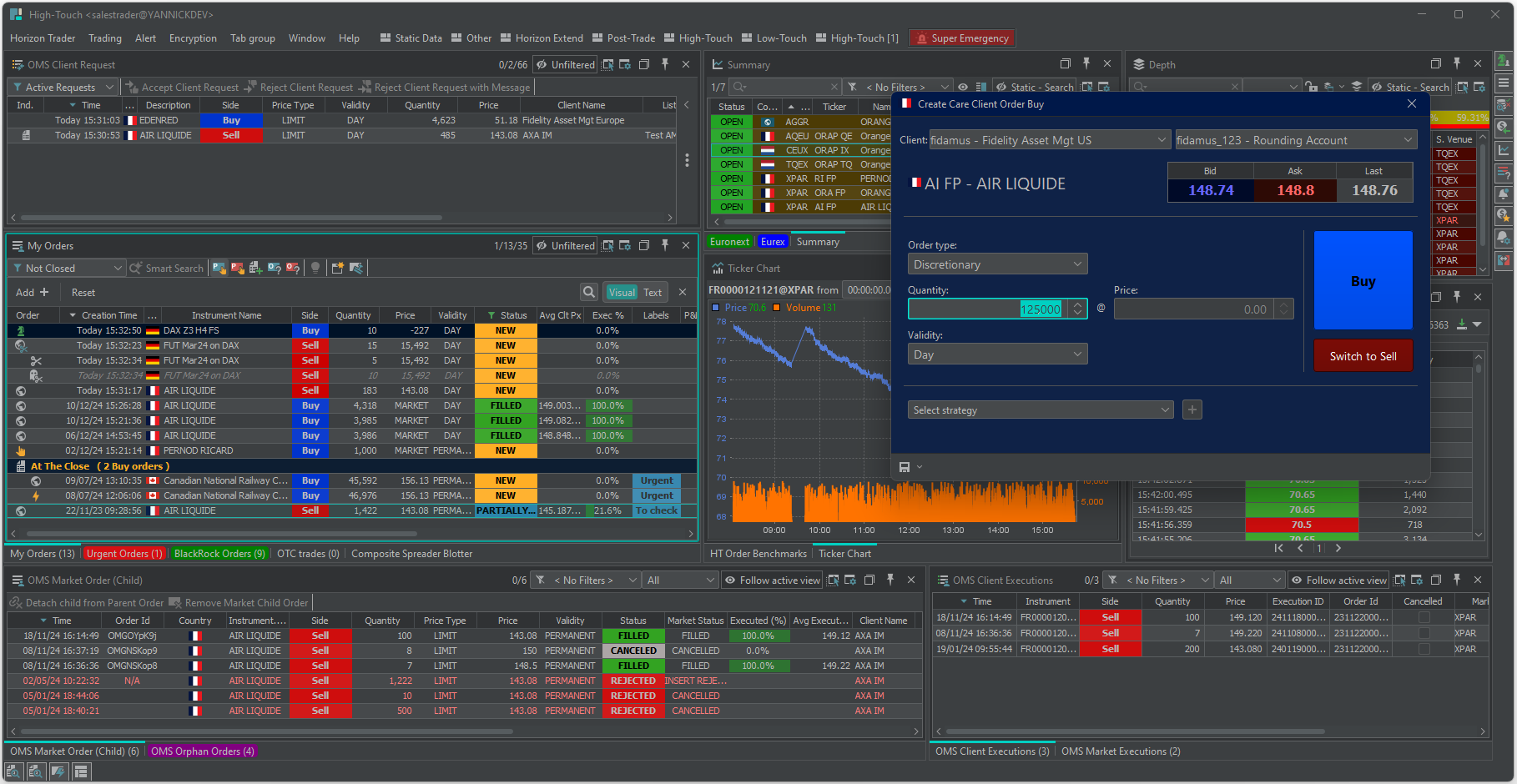
Customizable order dialog
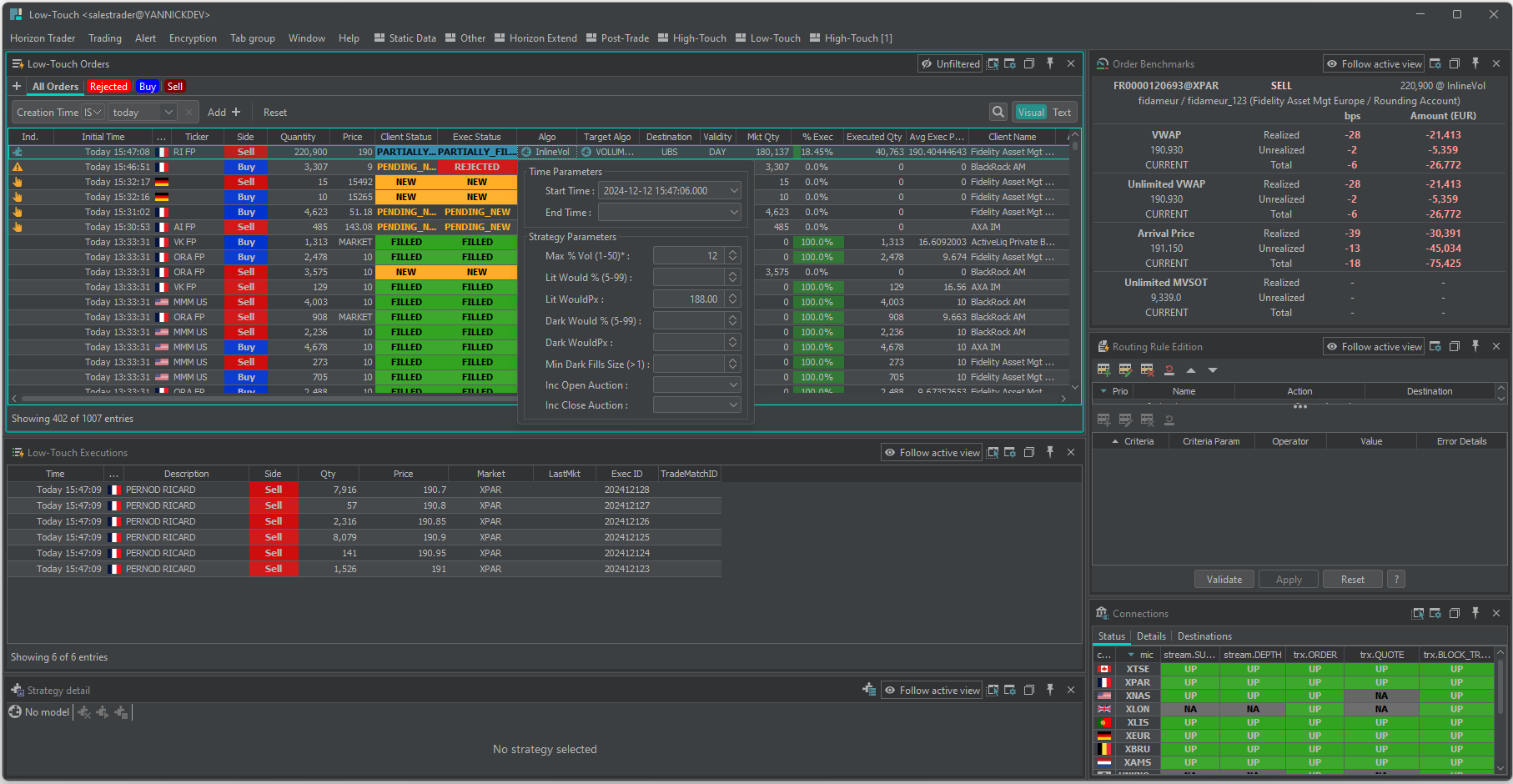
Enhanced order benchmarking
Frequently Asked Questions
An Order Management System (OMS) is a sophisticated software platform designed to streamline the entire lifecycle of trade orders, from order entry and execution to compliance and reporting. It acts as the central hub for managing trades across multiple asset classes, including equities, fixed income, derivatives, and forex.
Key features of an OMS include order entry and routing, real-time order tracking, compliance and risk management, integration with Execution Management Systems (EMS), trade allocation across multiple accounts, and detailed reporting and analytics on trade execution and performance.
Institutional investors need an OMS to automate manual processes, gain real-time visibility into trades, ensure compliance with regulatory requirements, handle high volumes of trades across multiple markets, and optimize trade execution to minimize transaction costs and market impact.
When selecting an OMS, key factors to consider include asset class coverage, integration capabilities with existing systems (EMS, risk management, accounting), user interface intuitiveness, customization options for specific trading strategies, and the vendor's reputation and track record in the industry.
An OMS manages the full trade order lifecycle including order entry, compliance, allocation, and reporting, while an Execution Management System (EMS) focuses specifically on advanced trading strategies, algorithmic trading, and access to liquidity. The two systems can be seamlessly integrated to enhance overall trading operations.