Prediction markets are attracting attention across institutional finance, but participation depends on more than identifying an attractive contract. Market makers need to price and manage inventory through abrupt changes in probability. Brokers need dependable order handling and execution. Trading platforms need to connect customer demand with liquidity while maintaining operational control.
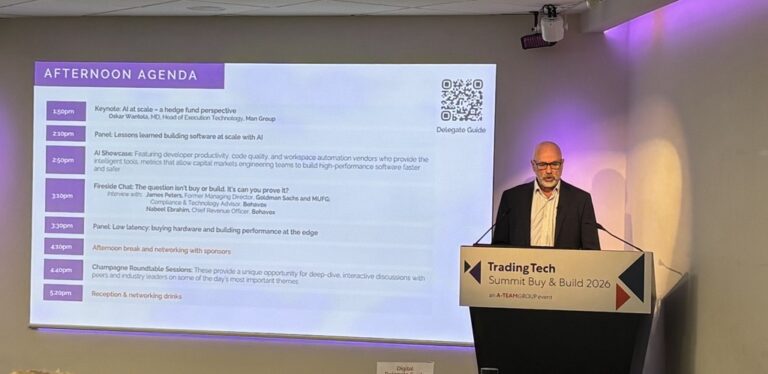
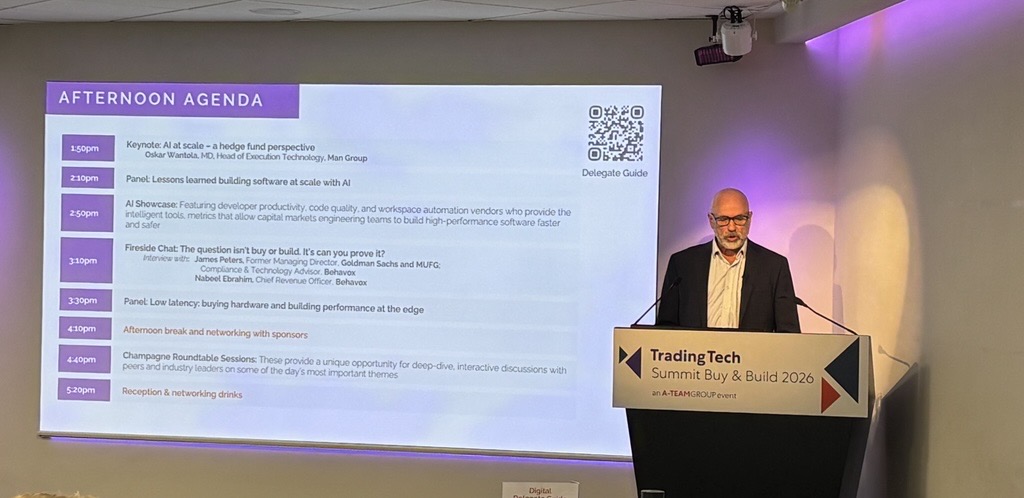
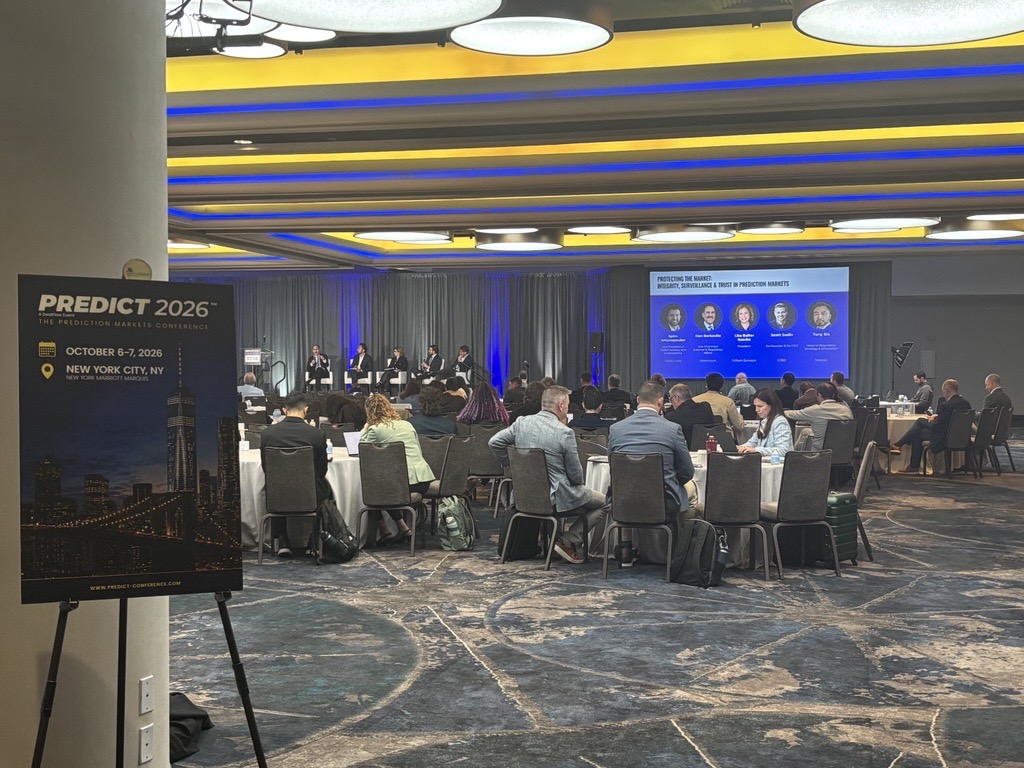
At PREDICT 2026 in New York, Horizon Trading Solutions attended discussions spanning institutional adoption, derivatives innovation, retail distribution and market integrity. Across those sessions, a common requirement emerged: event contracts need trading infrastructure that understands their specific behaviour and fits into existing financial workflows.
An accessible product with demanding trading requirements
A binary event contract pays according to whether a defined outcome occurs. Its price is commonly interpreted as a market-implied probability, although spreads, fees and liquidity affect how that price should be read. The apparent simplicity of the product can obscure the demands on the firms providing access and liquidity.
A sports contract behaves differently before and during a match. An economic-release contract can reprice sharply when data becomes available. A political contract may remain open for months, with its resolution dependent on precise wording and a specified source. Systems need to retain those distinctions as the number and variety of contracts increase.
Market makers need to manage probability and inventory together
For a liquidity provider, a fair probability is the starting point for a quote. Executable prices also need to reflect inventory, available capital, transaction costs and the risk of an event resolving suddenly. A model that works before an announcement may require different parameters as the event approaches or unfolds.
This makes configurable pricing and quoting important. Market makers need to integrate their own models, update orders as information changes and monitor exposure across contracts linked to the same event. Related outcomes can concentrate risk even when they appear as separate instruments.
The institutional discussions also highlighted a second liquidity model. For some bespoke corporate hedges, a specialist firm may negotiate a block and retain the exposure until settlement. That resembles underwriting and requires research and risk capacity alongside execution technology.
Brokers need a complete order workflow
For brokers, adding event contracts creates practical questions about how client orders enter the trading environment, which controls apply and what happens when execution fails or a venue disconnects.
A workable setup needs visibility throughout the order lifecycle, including acknowledgements, amendments, cancellations, partial fills and rejects. Venue access must connect with the broker’s operational processes, position records and downstream systems. Client eligibility and product permissions also need to be enforced through the relevant controls.
The conference discussions made an important distinction between displayed depth and available institutional liquidity. A small order book does not necessarily describe the size available through a specialist liquidity provider. Supporting larger clients may therefore require negotiated execution alongside electronic order-book access.
Trading platforms need infrastructure behind the customer interface
The retail-focused panel described sports as a major entry point, with financial, political and cultural contracts offering additional ways to engage customers. For consumer trading platforms, that breadth creates demands on instrument onboarding, market-data distribution and order processing.
A platform expanding its product range needs to understand how its trading infrastructure handles bursts of activity, repricing and changes in contract status. It also needs a clear separation of responsibilities between the customer interface, order-handling systems, execution venue and clearing or settlement arrangements.
The architectural discussion showed that these arrangements vary. An order book can operate off-chain while execution and settlement use blockchain infrastructure. Connectivity and operational design should follow the actual venue model, rather than assume that every prediction market works in the same way.
Contract definitions determine whether positions can be compared
One of the most consequential points concerned settlement. Two venues can list contracts referring to the same headline event and still produce different outcomes under their respective rules. The institutional panel described government-shutdown contracts that resolved differently because the definitions differed.
For brokers and market makers, contract metadata is part of the risk model. Comparing prices across venues requires checking the outcome definition, observation period, resolution source and payout terms. Apparent price differences can reflect different exposures.
A consolidated workspace should preserve these distinctions. Combining positions into one view does not, by itself, establish that they offset each other or qualify for cross-margining. Firms need explicit mappings and risk assumptions before treating related contracts as equivalent.
Market integrity depends on usable trading data
Surveillance and enforcement panels stressed that an isolated trade rarely provides enough context to establish misconduct. Investigations may require an account’s history, order activity, news timing and links to related contracts or venues. High win rates alone can be misleading when a strategy repeatedly trades outcomes already close to resolution.
Trading infrastructure therefore needs to support reliable records and integration with compliance processes. Permissions, traceable order activity and retrievable historical data help firms investigate behaviour and respond to information requests. Specialist surveillance systems remain important, with detection models adapted to different event types.
How Horizon supports prediction market tradings
Horizon Trading Solutions provides electronic trading technology spanning agency trading, principal trading and market making. In July 2026, we announced native Kalshi connectivity, enabling market makers, liquidity providers and proprietary trading firms to quote, trade and hedge event contracts alongside cash equities and listed derivatives.
Our published Kalshi capabilities address probability-based quoting, rapid repricing and cross-venue risk management, with low-latency execution, high message throughput and continuous operation and monitoring. This gives firms a concrete starting point for incorporating prediction markets into an established trading environment.
Horizon Extend allows firms to develop custom logic, algorithms and integrations within the platform. Clients can retain their own pricing and trading approach while building on existing electronic trading functionality. Horizon’s OEMS supports client order flow and configurable workflows, providing a basis for evaluating broker access requirements against the chosen venue and product scope.
For firms entering prediction markets, the implementation should start with a defined workflow: the contracts to trade, the supported connections, the pricing or execution model and the controls required. The next step is to test that workflow through changing prices, interrupted connections and the approach to resolution.
If you are building a market-making operation, adding event contracts to a brokerage offering or expanding a trading platform, speak with Horizon about your connectivity, execution and exposure-management requirements.
Editorial sources
This blog draws on the conference notes supplied by Horizon and the following public sources:
Conference and session context: https://predict-conference.com/ — alongside the seven distinct session transcripts supplied by Horizon.
Kalshi connectivity and market making: https://www.horizontrading.io/kalshi-connectivity-for-market-making/
Horizon Extend: https://www.horizontrading.io/solutions-services/agency-trading/horizon-extend/
Agency trading and OEMS: https://www.horizontrading.io/solutions-services/agency-trading/
Synthesis of the PREDICT 2026 session transcripts supplied by Horizon. Session observations are attributed to the discussions. Technical recommendations are Horizon’s analysis. No direct speaker quotations or unverified conference statistics are used.
Market makers need configurable pricing and quoting systems that integrate their own probability models, support rapid repricing as events unfold, and monitor exposure across related contracts. They must manage inventory, available capital, transaction costs, and the risk of sudden event resolution simultaneously. Two venues can list contracts on the same headline event but produce different settlement outcomes due to differing definitions, observation periods, resolution sources, and payout terms. Firms must explicitly verify contract metadata before treating positions across venues as equivalent or eligible for cross-margining. Brokers need a complete order workflow with visibility across the full lifecycle, including acknowledgements, amendments, cancellations, partial fills, and rejects. They must also enforce client eligibility and product permissions while integrating venue access with existing operational processes, position records, and downstream systems. Prediction market infrastructure must handle probability-based pricing, abrupt repricing around event triggers, and diverse contract types—such as sports, economic, and political events—each with unique behavioural characteristics. Architecture can also vary significantly, with some venues operating off-chain order books while using blockchain for execution and settlement. Effective surveillance requires an account's full history, order activity, news timing, and links to related contracts across venues, as isolated trades rarely provide sufficient context to establish misconduct. Trading infrastructure must support reliable recordkeeping, traceable order activity, retrievable historical data, and integration with compliance processes using detection models adapted to different event types.Frequently Asked Questions